Evaluating the Valentine with Ruby Rose Field Pattern for Creative Projects
In the realm of digital design and DIY crafting, selecting the right visual asset can significantly influence the final outcome of a project. The Valentine with Ruby Rose Field Pattern represents a specific aesthetic niche that blends romantic iconography with floral elegance. For creators ranging from professional sublimation artists to hobbyist scrapbookers, understanding the distinct characteristics of this pattern is essential before committing it to a production workflow. Unlike generic red-and-pink motifs often found in mass-market clip art, this seamless design offers a structured repetition that balances visual interest with usability across various mediums.
Defining the Aesthetic and Technical Specifications
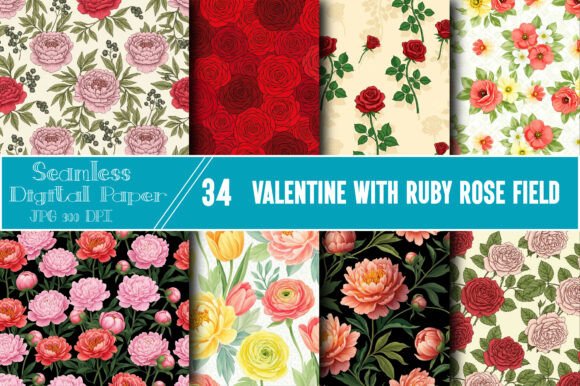
The core appeal of the Valentine with Ruby Rose Field Pattern lies in its composition. It typically features ruby roses set against a field of complementary shapes, creating a texture that is both rich and versatile. The "seamless" nature of the file is a critical technical attribute. In graphic design, a seamless pattern allows the image to tile infinitely without visible breaks or hard edges. This property is indispensable when scaling designs for large-format printing, wrapping cylindrical objects like tumblers, or covering expansive surfaces such as tote bags and fabric panels.
Technically, the resource is delivered as a high-resolution 300DPI JPG file. This resolution standard is the industry benchmark for print-on-demand services and physical crafting. A 300 dots per inch (DPI) ensures that when the pattern is printed on paper, cardstock, or transferred via heat press onto textiles, the details of the ruby roses remain sharp and the color gradients stay smooth. Lower-resolution alternatives often suffer from pixelation when scaled up, leading to a blurry or jagged appearance that undermines the perceived quality of the final product. Therefore, the technical fidelity of this specific pattern makes it a robust choice for projects requiring professional-grade output.
Comparing Seamless Patterns vs. Single-Element Graphics
When evaluating resources for creative endeavors, a common decision point is choosing between a seamless background pattern and single-element graphics. Single elements, such as isolated rose illustrations or standalone heart icons, offer flexibility for layering but require significant manual effort to create a cohesive background. The user must arrange, rotate, and duplicate these elements to achieve a full coverage look, which can be time-consuming and prone to inconsistency.
In contrast, the Valentine with Ruby Rose Field Pattern provides an immediate, uniform texture. This is particularly advantageous for:
- Sublimation Printing: When transferring images to mugs, phone cases, or apparel, a seamless pattern eliminates the risk of visible seams at the wrap-around points of the object.
- Digital Paper Packs: For planners and junk journals, having pre-tiled backgrounds saves hours of layout time compared to manually arranging individual assets.
- Textile Design: Fabric printing requires continuous repeats; a seamless file ensures the design flows naturally across bolts of cloth without interruption.
However, single-element graphics may still be preferable if the project demands a focal point where the background should be subtle or if the creator needs to manipulate specific parts of the design independently. The seamless pattern is best utilized when the texture itself is the primary design element rather than a backdrop for other content.
Practical Applications and Use Case Analysis
The versatility of the Valentine with Ruby Rose Field Pattern extends across multiple categories of craft and commercial design. Its suitability depends largely on the substrate and the intended function of the final product.
Product Branding and Packaging
For small business owners producing candles, soaps, or artisanal goods, label design is a key differentiator. Using this pattern on product labels can instantly elevate the brand's visual identity, suggesting a premium, handcrafted feel. The ruby rose motif conveys romance and luxury, making it ideal for gift sets or special occasion packaging. Compared to solid colors or simple typography-only labels, the textured depth of the pattern adds tactile and visual value without increasing production costs.
Stationery and Paper Crafts
In the context of stationery, the pattern serves effectively as a base for wedding invitations, bridal shower cards, and baby shower decorations. The high resolution ensures that text overlaid on the pattern remains legible, provided the contrast is managed correctly. For scrapbooking and decoupage, the seamless nature allows for trimming and pasting without worrying about edge mismatches. This is a distinct advantage over non-seamless images, which often reveal cut lines when used in collage work.
Digital Media and Social Presence
Beyond physical goods, the pattern functions well in digital spaces. As a social media background or website graphic, it provides a thematic consistency that aligns with Valentine's Day or general romantic aesthetics. However, designers must consider screen readability. While the pattern is visually striking, using it as a background for text-heavy web pages requires careful opacity adjustments to ensure accessibility and legibility.
Tradeoffs and Limitations to Consider
While the Valentine with Ruby Rose Field Pattern offers numerous benefits, it is not a universal solution for every design challenge. One limitation is the potential for visual busyness. Because the pattern covers the entire surface area, it can compete with foreground elements if not balanced correctly. For instance, placing intricate text or complex logos directly over a dense floral field may reduce clarity.
Additionally, the specific color palette—dominated by ruby tones—is inherently tied to themes of love, passion, and celebration. This limits its applicability for neutral, corporate, or somber projects. If a designer seeks a more subdued or seasonal variation outside of the romantic spectrum, this specific pattern may require significant color manipulation, which could alter the original artistic intent or degrade the image quality depending on the software used.
Another consideration is the format. As a JPG file, the pattern lacks the vector scalability of SVG or AI formats. While 300DPI is sufficient for most print applications, extremely large-scale murals or billboard-sized prints might benefit from vector-based assets that can be scaled indefinitely without any loss of quality. For standard consumer products like notebooks, t-shirts, and mugs, however, the raster format is entirely adequate and often easier to integrate into sublimation workflows.
Decision Factors: When to Choose This Pattern
Creatives should opt for the Valentine with Ruby Rose Field Pattern when their project goals align with the following criteria:
- Need for Uniformity: The project requires a consistent, repeating texture across a large surface area.
- Romantic or Festive Theme: The target audience or event theme centers around Valentine's Day, weddings, or romantic celebrations.
- Print Quality Requirements: The end product will be physically printed, necessitating high-resolution (300DPI) assets.
- Time Efficiency: The creator needs a ready-to-use background to accelerate the design process for items like journals, planners, or sublimation blanks.
Conversely, if the project involves minimalistic branding, requires vector scalability for massive installations, or targets a demographic unrelated to romance, alternative patterns or custom illustrations would likely yield better results. The decision ultimately rests on balancing the aesthetic requirements of the theme with the technical constraints of the medium.
Integrating the Pattern into Broader Workflows
Successful integration of the Valentine with Ruby Rose Field Pattern often involves combining it with other design elements. For example, in junk journaling, the pattern can serve as the base page, while die-cuts, stickers, and handwritten notes are layered on top to create depth. In sublimation, the pattern can be masked or blended with solid color blocks to create zones of focus. By treating the pattern as one component of a larger design system rather than the sole visual element, creators can mitigate the risk of visual clutter and produce sophisticated, multi-layered compositions.
Whether used for revamping cute tote bags, enhancing notebook covers, or creating stunning social media backgrounds, this pattern offers a reliable foundation for creative expression. Its balance of detailed imagery and seamless utility makes it a practical asset for those looking to add a touch of voguish design to their portfolio without compromising on technical standards.