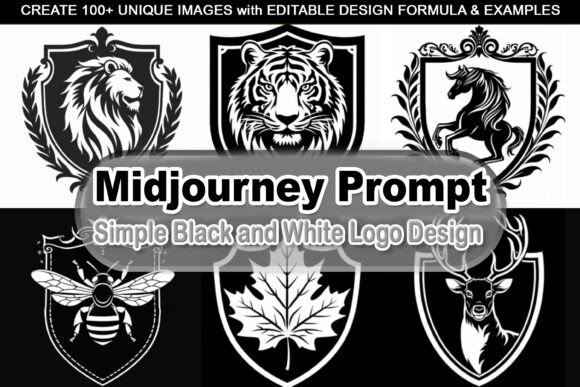
Understanding the Editable Prompt - Black White Logo for Modern Design
In the rapidly evolving landscape of digital design, the tools available to creators are shifting from static assets to dynamic generation methods. One such innovation is the Editable Prompt - Black White Logo. This resource represents a fundamental change in how designers approach branding and visual identity, moving away from purchasing pre-made clipart toward generating custom imagery through artificial intelligence. For professionals and hobbyists alike, understanding what this product actually offers, how it functions within the AI ecosystem, and where it fits compared to traditional design resources is essential for making an informed investment.
The core concept behind the Editable Prompt - Black White Logo is not the delivery of a finished image file, but rather the provision of a structured text command. This prompt is engineered to work with advanced text-to-image models like MidJourney, DALL·E, and Leonardo. By utilizing specific parameters focused on high-contrast monochromatic aesthetics, users can generate unique logo concepts that maintain the timeless appeal of black and white design while offering infinite variability. The distinction here is critical: you are purchasing a method of creation, not a single asset.
The Mechanics of AI-Driven Logo Generation
To appreciate the utility of the Editable Prompt - Black White Logo, one must first understand the mechanics of prompt engineering. Unlike standard search queries, effective AI prompts require precise syntax, style descriptors, and structural constraints to yield professional results. The "editable" nature of this product means the creator has already performed the heavy lifting of testing various parameters to ensure the output remains consistent with the desired aesthetic.
When a user acquires this resource, they receive a PDF containing a template. Within this template, specific placeholders—often marked by brackets—are designed for customization. For instance, a user might replace a generic term with a specific animal, symbol, or abstract shape relevant to their brand. The underlying structure ensures that regardless of the inserted subject, the resulting image adheres to the strict black and white color palette and maintains a level of detail suitable for vectorization or print use. This systematic approach reduces the trial-and-error phase that typically plagues new users of generative AI.
Comparing Static Assets vs. Generative Prompts
When evaluating design resources, the primary comparison lies between traditional stock libraries and generative prompt tools. Stock image sites offer thousands of pre-rendered black and white logos. While convenient, these options come with significant limitations. The most notable drawback is lack of exclusivity; if a designer purchases a popular icon, it is likely that other businesses are using the same or very similar graphic. Furthermore, modifying a static raster or vector file often requires advanced software skills to alter shapes or proportions without degrading quality.
In contrast, the Editable Prompt - Black White Logo offers a solution centered on uniqueness and adaptability. Because the image is generated fresh each time the prompt is executed, the probability of two users creating identical logos is statistically negligible. Even with the same subject matter, slight variations in lighting, line weight, and composition occur naturally during the generation process. This makes the prompt-based approach superior for brands requiring a distinct visual identity that cannot be replicated by competitors.
However, there are tradeoffs. Using a prompt requires access to an AI platform, which may involve subscription costs separate from the purchase of the prompt itself. Additionally, the output is initially a raster image (usually PNG or JPG), whereas many professional workflows prefer native vector files (SVG, EPS) for scalability. While AI-generated images can be traced into vectors, this adds an extra step to the workflow that does not exist when buying a ready-made vector pack. Therefore, the decision to use this tool depends heavily on the user's technical comfort level and their specific end-use requirements.
Evaluating Suitability for Different User Profiles
The Editable Prompt - Black White Logo is not a one-size-fits-all solution. Its value proposition shifts depending on the experience level and goals of the user. For professional graphic designers, this tool serves as a rapid prototyping engine. Instead of spending hours sketching initial concepts, a designer can generate dozens of variations in minutes to present to a client. The ability to instantly swap out elements allows for agile iteration based on feedback, significantly speeding up the conceptual phase of a project.
For small business owners or entrepreneurs who are not trained designers, the prompt acts as a bridge to professional-quality visuals. Many individuals struggle with the learning curve of complex design software like Adobe Illustrator. By following the step-by-step guide included with the prompt, a non-designer can produce a sophisticated logo that aligns with current design trends. The focus on black and white aesthetics is particularly beneficial here, as monochrome designs tend to be more versatile across different media, from website headers to embossed packaging.
Conversely, this resource may not be the best fit for those seeking immediate, plug-and-play solutions without any additional effort. If a user lacks access to an AI generator or is unwilling to learn the basics of prompt manipulation, a traditional clipart library might be more efficient despite its limitations on originality. Similarly, for projects requiring extremely specific geometric precision or corporate compliance with strict brand guidelines, the stochastic nature of AI generation might introduce inconsistencies that are difficult to control.
Practical Applications and Workflow Integration
The versatility of the Editable Prompt - Black White Logo extends beyond simple logo creation. The principles embedded in the prompt allow for the generation of cohesive visual systems. For example, once a base logo is established, the same prompt structure can be adapted to create matching icons, social media avatars, and background patterns. This consistency is crucial for building a strong brand presence.
Consider a scenario involving a pet grooming business. A designer could use the prompt to generate a stylized silhouette of a dog in high-contrast black and white. They could then modify the prompt slightly to create a series of related images featuring cats, birds, or rabbits, all maintaining the same artistic style. This creates a unified look for marketing materials without the need to commission multiple illustrations. The "delicate realistic details" mentioned in the product features ensure that even at smaller scales, such as on a sticker or business card, the imagery retains clarity and impact.
Furthermore, the format of the deliverable—a PDF with clear instructions—lowers the barrier to entry. Users do not need to decipher cryptic code or navigate complex interfaces. The guide simplifies the process, explaining exactly where to insert keywords and how to adjust parameters for different outcomes. This educational component adds significant value, transforming the purchase from a simple transaction into a learning opportunity about AI art generation.
Decision Factors: When to Choose a Prompt Over Alternatives
Determining whether the Editable Prompt - Black White Logo is the right choice requires a careful assessment of project needs, budget, and timeline. If the primary goal is to secure a unique, copyright-friendly visual identity with minimal upfront cost, the prompt-based approach is highly advantageous. It eliminates the risk of trademark disputes associated with generic stock imagery and provides a level of customization that rivals expensive custom illustration services.
However, if the project demands immediate delivery of a vector file ready for large-format printing, the user must factor in the time required to trace and refine the AI output. In situations where time is the most critical constraint and the budget allows for premium assets, a dedicated human designer or a high-end vector marketplace might still be the preferred route. Additionally, for industries with rigid regulatory standards regarding logo usage, the unpredictability of AI generation might necessitate a more controlled design process.
Ultimately, the Editable Prompt - Black White Logo represents a powerful middle ground between total automation and manual creation. It empowers users to leverage the speed of AI while retaining creative control over the final output. By understanding its strengths in customization and uniqueness, alongside its limitations regarding file formats and the need for post-processing, designers and business owners can make a strategic decision that aligns with their long-term branding goals. Whether used for personal projects, small business branding, or professional prototyping, this tool offers a modern pathway to achieving high-quality, monochromatic visual design.