Valentine's Day Candle House Laser Cut: A Practical Guide to Design, Formats, and Execution
The intersection of digital design and physical crafting has created a robust market for downloadable templates, particularly during seasonal peaks like Valentine's Day. Among the most popular items is the Valentine's Day Candle House Laser Cut, a 3D silhouette file designed to transform flat materials into romantic home décor. Unlike pre-fabricated plastic or ceramic candle holders, this digital product requires a specific workflow involving laser cutting machines, CNC routers, or compatible software. Understanding the nuances of this format, its technical requirements, and how it compares to other decorative options is essential for makers, small business owners, and DIY enthusiasts looking to create high-quality results.
Defining the Valentine's Day Candle House Laser Cut Format
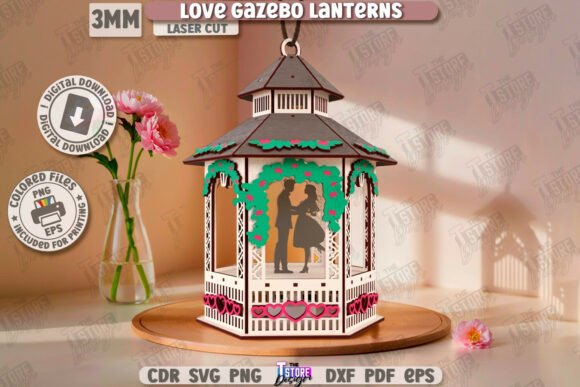
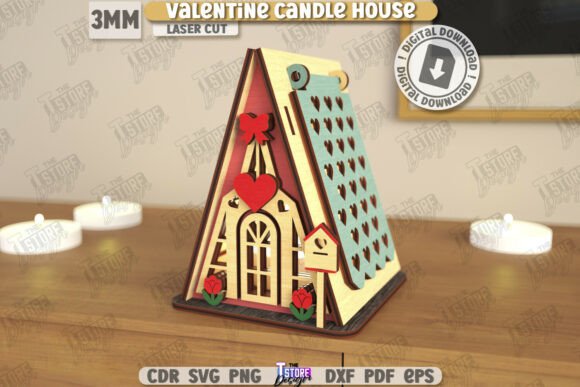
At its core, a Valentine Candle House Laser Cut file is not a physical object but a set of vector instructions. These files guide a machine on where to cut through material and where to engrave surface details. The design typically features a house-shaped structure with intricate patterns, often including hearts, windows, and text that celebrate love and romance. When assembled, these pieces form a three-dimensional enclosure for a tea light or pillar candle, casting patterned shadows that enhance the ambiance of a room.
What distinguishes this specific product from generic SVG bundles is its precision engineering for dual-action processes. Most professional-grade files in this category utilize a color-coded line system to differentiate operations. In this specific design, red lines indicate cut paths, instructing the machine to slice completely through the material to separate the panels. Conversely, black lines represent engrave paths, telling the machine to etch details onto the surface without breaking the structural integrity of the piece. This separation allows for complex textures and visual depth that would be difficult to achieve with simple cut-only designs.
Evaluating File Formats and Software Compatibility
One of the most critical factors in successfully executing a Valentine's Day Candle House Laser Cut project is selecting the correct file format. Digital products in this niche typically come as a zip archive containing multiple versions: SVG, EPS, PNG, PDF, and DXF. Each format serves a different purpose and interacts differently with various software environments.
- SVG (Scalable Vector Graphics): Ideal for web use and many entry-level laser software packages. However, users working with advanced software like Lightburn should exercise caution. It is a known issue that Lightburn can sometimes distort dimensions when importing SVG files, leading to misaligned cuts or incorrect scaling.
- DXF (Drawing Exchange Format): Often considered the gold standard for laser cutting and CNC machining. For users operating Lightburn or similar industrial software, the DXF version included in the package is generally recommended. It maintains precise geometric data and minimizes the risk of dimensional distortion.
- EPS and PDF: Useful for compatibility with Adobe Illustrator or CorelDRAW, offering flexibility for designers who wish to modify the layout before sending it to the machine.
- PNG: A raster image primarily used for reference, mockups, or printing labels, rather than for direct machine operation.
The decision between formats often depends on the user's existing workflow. If you are using an older machine with legacy software, EPS might be your safest bet. If you prioritize speed and accuracy on modern hardware, the DXF file is superior. It is also worth noting that while the file includes a standard size, the nature of vector graphics allows for scaling. However, scaling too large may require thicker materials to maintain stability, while scaling too small could compromise the detail of the engraved elements.
Comparing Laser Cut Silhouettes to Alternative Décor Options
When planning Valentine's Day décor, consumers face a variety of choices ranging from mass-produced items to handmade crafts. How does the Valentine Candle House Laser Cut stack up against these alternatives?
Mass-Produced Plastic or Ceramic Holders
Store-bought candle holders offer immediate gratification and consistency. They are inexpensive and require no assembly. However, they lack uniqueness and often feature generic designs that do not align with a specific aesthetic theme. Furthermore, their environmental footprint is higher due to packaging and shipping. In contrast, a laser-cut design allows for customization of wood type, finish, and size. While it requires an initial investment in time and equipment, the result is a bespoke item that feels more personal and artisanal.
Hand-Carved Wooden Designs
Traditional woodworking offers a warm, organic feel but demands significant skill and time. Carving intricate heart patterns and ensuring perfect symmetry for a 3D house structure is labor-intensive. The Valentine's Day Candle House Laser Cut approach democratizes this process. By offloading the precision work to a machine, the creator can focus on finishing touches like sanding, staining, and assembly. This hybrid approach balances the charm of wood with the efficiency of digital fabrication.
3D Printed Alternatives
3D printing has emerged as a strong competitor for creating custom shapes. It excels at producing complex geometries that are impossible to cut from flat sheets. However, 3D printed objects often show layer lines and may have lower heat resistance depending on the filament used. Wood, the typical medium for laser cutting, offers superior thermal properties for candle holders and provides a natural texture that plastic cannot replicate. Additionally, the "shadow play" effect created by thin, laser-engraved wood panels is distinct from the solid appearance of most 3D prints.
Strengths, Tradeoffs, and Decision Factors
Choosing to pursue a Valentine's Day Candle House Laser Cut project involves weighing several practical considerations. The primary strength lies in scalability and repeatability. Once the settings are dialed in, a maker can produce dozens of identical units with minimal variance, making it viable for small-scale commercial ventures or gifting multiple friends and family members.
However, there are tradeoffs. The process is strictly limited to 2D-to-3D construction; you cannot create truly volumetric curves or undercuts. The design relies on interlocking tabs or glue joints to stand upright. If the material thickness is not accounted for in the design parameters, the assembly may be wobbly. Additionally, the quality of the final product is heavily dependent on the quality of the raw material. Thin plywood or basswood works best, but cheaper composites may burn excessively or emit unpleasant fumes.
Another factor is the learning curve. Beginners must understand power and speed settings to ensure the red lines cut cleanly while the black lines engrave deeply enough to be visible but not so deep that they weaken the wood. Testing on scrap material is non-negotiable. If you lack access to a laser cutter, this option is not feasible unless you outsource the cutting, which increases costs and reduces control over the timeline.
When This Option Is the Right Choice
The Valentine Candle House Laser Cut is the optimal choice for specific scenarios. First, it is ideal for individuals or businesses already equipped with a laser cutter or CNC machine. It maximizes the utility of existing hardware. Second, it fits well for those seeking a "maker" aesthetic—décor that showcases craftsmanship and the beauty of raw materials. Third, it is excellent for event planners or boutique shops looking to create themed centerpieces that can be customized with names, dates, or specific messages via the engraving paths.
Conversely, if you need a single item immediately, do not own cutting equipment, or prefer a smooth, glossy finish over natural grain, this may not be the right path. In such cases, purchasing a finished ceramic holder or exploring resin casting might yield better results relative to the effort required.
Technical Considerations for Success
To ensure the best outcome, attention to detail in the preparation phase is vital. As noted, if you are using Lightburn software, prioritizing the DXF file over the SVG is a crucial step to prevent dimension distortion. Always verify the scale upon import. Check that the red lines correspond to your cut head and the black lines to your engrave head within your software settings.
Material selection also plays a pivotal role. Baltic birch plywood is often preferred for its clean edges and lack of voids, while basswood offers a smoother surface for fine engraving. Avoid treated woods or plastics that release toxic fumes when heated. Finally, remember that this is a digital product. If you require a different file type, a specific color variation for the PNG preview, or adjustments to the size, contacting the seller directly is the recommended course of action. Many creators are willing to accommodate reasonable requests to ensure the file meets your specific machine's capabilities.
Ultimately, the Valentine's Day Candle House Laser Cut represents a bridge between digital creativity and tangible warmth. It offers a flexible, customizable solution for those willing to engage with the technology, providing a distinct alternative to mass-market décor. By understanding the file formats, respecting the limitations of the medium, and choosing the right tools, you can create enduring, romantic accents that capture the spirit of the season.