Welcome Round Door Sign SVG: A Guide to Flawless DIY Decor
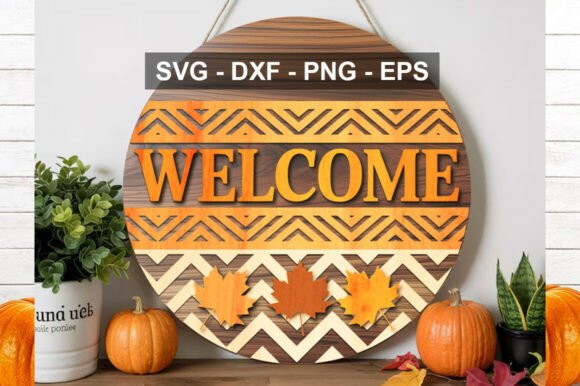
Transforming a front porch into a welcoming sanctuary often hinges on the smallest details. A beautifully crafted door sign acts as the first handshake for your guests, setting the tone for warmth and hospitality. The Welcome Round Door Sign SVG has emerged as a favorite among crafters because it combines the rustic charm of traditional farmhouse decor with modern precision. This specific design, featuring intricate leaf cutouts, chevron accents, and 3D autumn leaves, offers a sophisticated look that is difficult to achieve with mass-produced store-bought items. However, simply downloading a file does not guarantee a professional result. Many enthusiasts overlook critical steps in the process, leading to wasted materials, frustrated evenings, and signs that lack the depth they envisioned.
Understanding the Value of Layered Vector Designs
The appeal of this particular Welcome Round Door Sign SVG lies in its construction. Unlike flat, single-layer graphics, this file is engineered with multiple layers to create visual depth. When executed correctly, the 3D autumn leaves sit atop the base, casting subtle shadows and adding texture that mimics high-end handmade wood signs. This layered approach is what separates a hobbyist project from a piece that looks like it was commissioned by a professional artisan.
People are drawn to this design for several practical reasons. First, it is optimized for year-round use; while the fall motifs are prominent, the clean typography and geometric chevron patterns ensure it doesn't feel out of place in other seasons. Second, the scalability of vector formats means you can resize the sign to fit a standard door or a large entryway without losing clarity. Finally, for small business owners and Etsy sellers, having a polished, ready-to-cut file streamlines production, allowing you to focus on finishing touches rather than struggling with complex digital designs.
Common Pitfalls When Choosing and Using SVG Files
Despite the accessibility of digital crafting, many beginners make predictable mistakes that compromise the final product. One of the most frequent errors is assuming all "SVG" files are created equal. Not every file is optimized for laser cutting or vinyl weeding. Some free or low-cost downloads contain unnecessary anchor points, overlapping lines, or ungrouped elements that cause machines to stall or produce jagged edges.
Ignoring File Compatibility
A significant oversight occurs when users download a file package without verifying which format works best for their specific machine. While the term "SVG" is ubiquitous, different software requires different inputs. For instance, Silhouette Studio Basic Edition relies heavily on DXF files, whereas Cricut Design Space prefers SVGs. If you attempt to force an incompatible format, you may encounter distorted shapes or missing text. The Welcome Round Door Sign SVG package addresses this by including DXF, EPS, and PNG files, but users must still know which one to import.
Neglecting Material Testing
Another common mistake is skipping the test cut. Crafters often rush to cut their expensive basswood or premium vinyl directly from the main file. Without a test run on scrap material, you risk wasting resources on incorrect blade depths, speed settings, or pressure levels. Intricate designs like the leaf cutouts in this sign require precise settings; too much pressure can tear delicate leaves, while too little will leave them uncut.
Overlooking Assembly Complexity
The beauty of this design comes from its layered nature, but this also introduces complexity. Beginners sometimes underestimate the time required to assemble the 3D elements. If the adhesive backing isn't applied correctly, or if the spacing between layers is inconsistent, the sign can look sloppy rather than dimensional. Additionally, failing to account for the thickness of the materials when planning the layout can result in pieces that don't align properly.
How Mistakes Impact Your Project Quality
These oversights have tangible consequences. Poor file compatibility leads to hours of troubleshooting in design software, delaying your project timeline. Incorrect machine settings result in ruined materials, increasing the cost per sign significantly. Perhaps most damaging is the aesthetic impact; a sign with torn leaves or misaligned chevrons fails to convey the warm, inviting message intended. For entrepreneurs, these quality issues can lead to negative reviews and lost sales, as customers expect a flawless finish when purchasing handmade decor.
Furthermore, using low-resolution raster images (like JPEGs) instead of true vectors can ruin the presentation. If you scale up a non-vector image, it becomes pixelated and blurry, destroying the crisp lines essential for a modern farmhouse look. The Welcome Round Door Sign SVG avoids this by providing fully editable vector artwork, but only if used in the correct format.
Practical Steps for a Professional Finish
To ensure your project succeeds, follow these corrective measures before you begin cutting.
- Verify Your Software Requirements: Before downloading, confirm which file type your machine needs. If you use Silhouette Studio Basic, prioritize the included DXF file. For Glowforge or Cricut, the SVG file is your primary tool. Having the right file saves time and prevents conversion errors.
- Perform a Test Cut: Always run a small section of the design on scrap material first. Adjust your blade depth and pressure until the intricate leaf details cut cleanly without tearing. This step is non-negotiable for complex, layered designs.
- Check Layer Order: Open the file in your design software and inspect the layer panel. Ensure the background, text, and decorative leaves are grouped logically. Reorganize them if necessary so that the assembly process follows a clear sequence.
- Select Appropriate Materials: For wood signs, choose a material thickness that supports the 3D effect without being too heavy for mounting. For vinyl projects, use a high-quality permanent vinyl that adheres well to textured surfaces.
- Plan Your Assembly: Lay out all cut pieces before applying adhesive. Use transfer tape or a lightbox to ensure perfect alignment of the chevron accents and leaves. Patience during this stage ensures the final sign looks professionally constructed.
Evaluating the File Package Before You Buy
When considering the purchase of a digital design, due diligence is key. Look beyond the preview image and examine the file specifications. A high-quality package, like the one for this round door sign, should offer versatility. It should include an EPS file for full editability in professional software like Adobe Illustrator, a PNG file for instant printing at 300 DPI, and the necessary vector formats for cutting machines.
Ask yourself if the design is scalable. Can you easily change the size to fit a unique door frame? Are the colors editable? With the Welcome Round Door Sign SVG, the answer is yes. The clean vector artwork allows you to adjust colors to match your specific home palette, whether you prefer deep oranges and browns for Thanksgiving or neutral tones for a year-round display.
Also, consider the support provided. Reliable sellers often include instructions or tips for cutting and assembling. While this specific file is designed to be user-friendly, understanding how to handle the layers makes a difference. By choosing a comprehensive file set that includes DXF, SVG, EPS, and PNG, you eliminate the need to search for additional resources or converters, ensuring a smooth workflow from download to display.
Final Thoughts on Crafting with Confidence
Creating a stunning entrance for your home is about more than just following a template; it's about understanding the tools and techniques that bring the design to life. The Welcome Round Door Sign SVG provides the foundation for a beautiful, layered masterpiece, but your attention to detail determines the outcome. By avoiding common pitfalls like ignoring file formats, skipping test cuts, and rushing assembly, you can create a sign that truly reflects the warmth and care of your home. Whether you are a seasoned crafter or a beginner looking to try something new, taking these practical steps will ensure your project is a success, resulting in a personalized touch that welcomes everyone who crosses your threshold.